
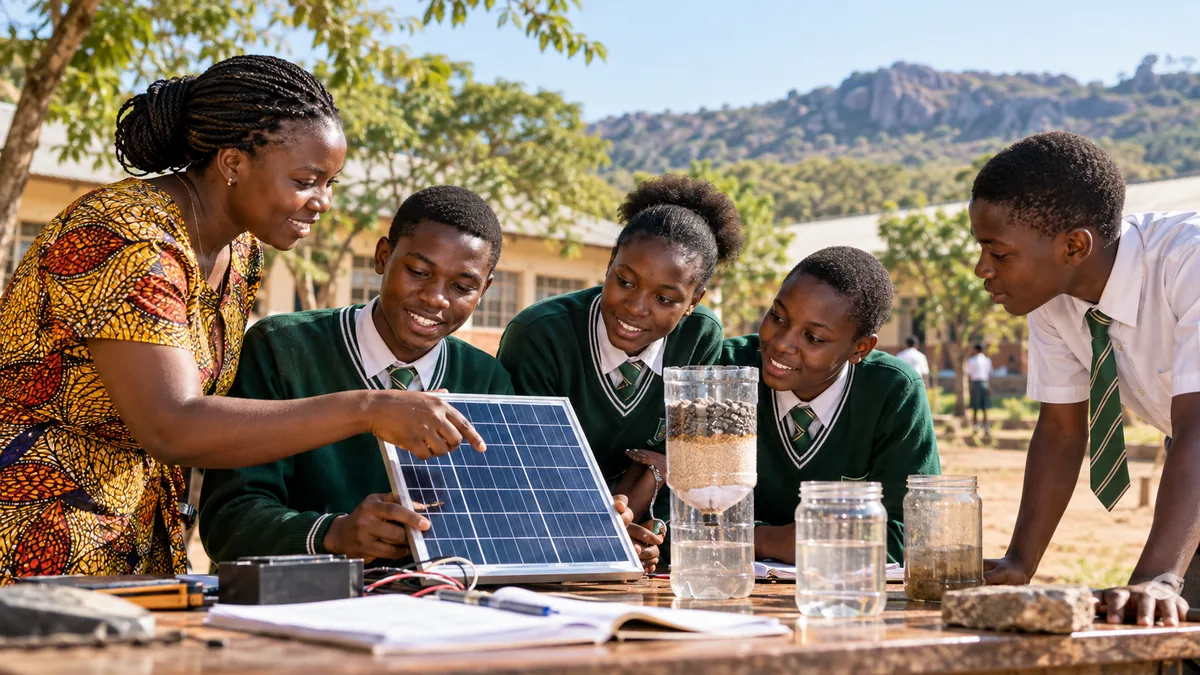
A celebration of learning, ideas and community
The Envirolympics concept proposal prioritises a four-level learning and recognition pathway: school → district → provincial → national. Friendly competitions and exhibitions would showcase ongoing, teacher-supervised projects and independently reviewed environmental outcomes—not reward only one-day publicity.
School project showcases
Students present verified local projects, lessons learned and next steps.
Environmental innovation challenges
Teams propose practical solutions and explain how their ideas would be tested.
Workshops and skills training
Facilitated activities could cover sustainability, enterprise, technology and practical green skills.
Sports, culture and youth leadership
Inclusive cultural and sporting activities can bring communities together around environmental action.
Mentorship and community participation
Environmental experts, educators and businesses may contribute subject to agreed program arrangements.
Recognition of learning and progress
Awards can celebrate evidence, responsibility, originality and local benefit.
Dates, prizes and registration
There is no confirmed registration opening, festival date, national judging cycle or set of prize awards on this informational website. The Ministry proposal discusses a potential pilot, not an approved event calendar.
Disc golf and environmental stewardship
Disc golf may form part of future community and youth activity programming, alongside environmental messages, inclusive recreation and practical projects. It is not a substitute for school environmental learning.
Proposed environmental project awards
- Greenest School
- Water Stewardship Champion
- Best Environmental Innovation
- Biodiversity Champion
- Best Community Impact Project
- Environmental Stewardship School of the Year
Award names are proposed, not announced competitions.
Illustrative project evaluation (100% total)
- Verified environmental outcomes — 35%
- Student participation and learning — 20%
- Innovation and problem-solving — 15%
- Sustainability and maintenance — 15%
- Community engagement — 10%
- Evidence quality and reporting — 5%
Scoring must be finalised with the relevant education authorities and adapted for school size, rural/urban context and resources.