
Impact starts with an honest baseline
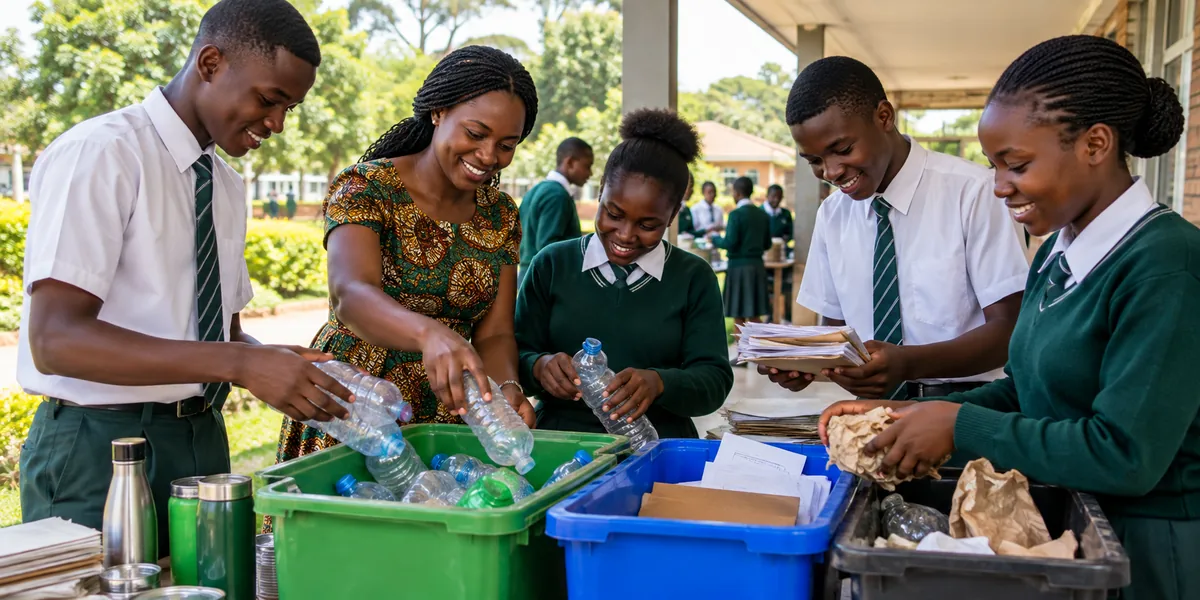
Measure changes from an agreed starting point. A digital school project record can capture trees surviving, species and restored areas; kilograms of waste diverted; litres of water saved; kWh saved or generated; habitat condition; and student learning. Teacher verification and appropriate independent sampling protect accuracy. A dashboard does not certify carbon credits.
Activity records
Track supervised participation, dates, project type and materials used.
Environmental outcomes
Record survival rates, water observations, waste changes or measured energy where feasible.
Verification
Teachers review evidence and correct inaccuracies before any recognition.
Safeguarding
Avoid publishing identifiable child data; obtain appropriate permissions for photos and reports.
Aggregated reporting
Future dashboards may show district or school-level trends without exposing personal learner information.
Continuous improvement
Use results to improve the next project, not simply to accumulate scores.
Recognition is not verification of environmental finance
Recognition points or badges are educational signals. They must not be presented as third-party-verified emission reductions or as a guarantee of commercial carbon-credit revenue.
Proposed recognition: school → district → provincial → national
Recognition is intended to reward genuine, sustained environmental improvement while allowing fair comparisons between schools with different sizes, resources and starting conditions.
- Verified environmental outcomes: 35%
- Student participation and learning: 20%
- Innovation and problem-solving: 15%
- Sustainability and maintenance: 15%
- Community engagement: 10%
- Evidence quality and reporting: 5%
Illustrative judging weights add to 100%. Final rules, accessibility arrangements and scoring are subject to Ministry agreement.