
What this program involves
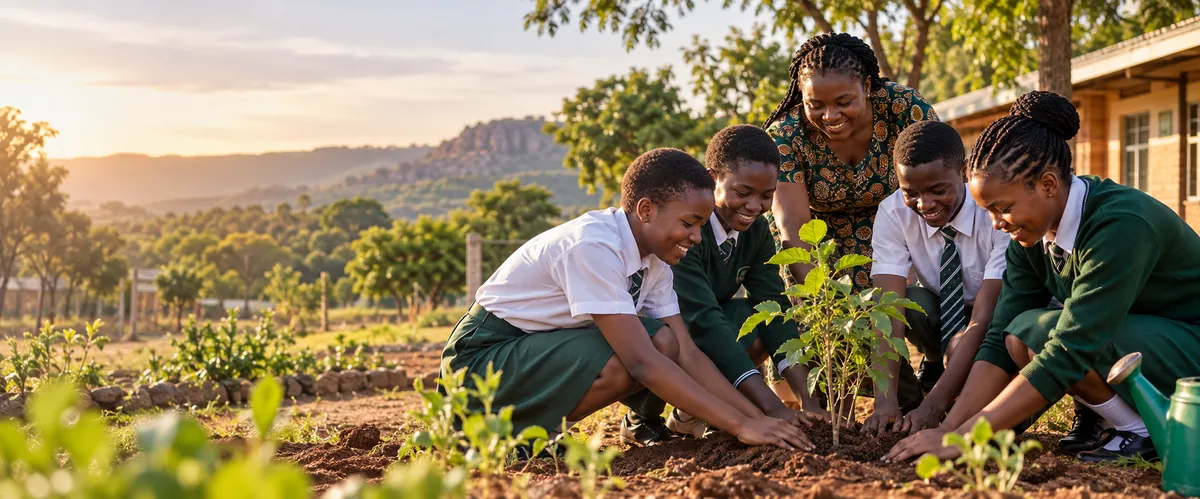
This ongoing stewardship program brings practical environmental education into teacher-supervised school activity. Suggested projects from the October 2026 concept proposal include: Indigenous gardens; pollinator protection; habitat activities; biodiversity surveys. Each approved project should have a plan, baseline, safe responsibilities and evidence of results.
Possible school activities
- Map safe school biodiversity observation areas.
- Create a teacher-verified biodiversity diary with drawings or photographs.
- Explore the value of indigenous plants and pollinator habitats.
- Organise litter-prevention and habitat-care activities where permitted.
What schools could measure
- Habitat condition, species observations and area maintained.
- Areas monitored for improved habitat stewardship
- Student learning and community awareness activities
How progress could be recognised
Students keep learning records and safe project evidence. Teachers review the records against clear criteria. Recognition can celebrate effort, improvement, teamwork and documented environmental outcomes without equating a badge or competition score with a carbon credit.
From stewardship program to measurable project
A school can run this program throughout the year while choosing specific projects to implement in phases. Example activities: Indigenous gardens; pollinator protection; habitat activities; biodiversity surveys.
Indicators to record: Habitat condition, species observations and area maintained. All reported results require a documented baseline and teacher review.